





20+ AI Marketing Tools That You Must Use


Aug 27, 2026

Contents
 33 min
- What is an AI Marketing Tool?
- Best AI Marketing Tools
- A: AI Marketing tools for CRM
- B: AI Marketing tools for Content Creation
- C: AI Marketing tools for Email Marketing
- D: AI Marketing tools for Paid Advertising
- E: AI Marketing Tools for Social Media Management
- F: AI Marketing Tools For SEO
- G: AI Marketing Tools For Web Design
- H: AI Marketing Tools For Video Creation
- I: AI Marketing Tools For B2B Marketing
- J: AI Marketing tools for SaaS Marketing
- K: AI Marketing tools: Chatbots
- L: AI Marketing Tools For Marketing Analytics
- Conclusion


I made effective use of AI marketing tools recently when I helped one of our clients. There were no conversions, and they were just uploading material without a plan.
I used a wide range of AI marketing tools, including AI SEO platforms to close critical gaps; ChatGPT and Claude for making content on a large scale; Perplexity for researching competitors in real time; and many more.
After a few months, the marketing machine wasn't just a guess.
There was no doubt about the findings. Web analytics could be used; the amount of material produced tripled without adding staff, and the client started showing up in AI mode search results and AI overviews for high-intent queries.
By focusing on AEO, we made sure that the brand always answered the exact questions that buyers had at each stage of the process.
The right AI tools can bring about that change when you use them with a clear goal and a well-thought-out plan.
What is an AI Marketing Tool?
An AI marketing tool is a software that uses machine learning, natural language processing, or predictive analytics to automate, optimize, and scale marketing tasks that would normally take a lot of work and consume a lot of time if done manually.
AI marketing tools do everything, from coming up with content and dividing audiences into groups to researching competitors and making sure your site shows up in search results.
- Platforms like ChatGPT and Claude make a lot of content that fits with the brand, and Perplexity provides real-time research that keeps strategy up to date.
- Such productivity is even more possible with tools like Jasper and Copy.ai, which let teams make many assets for ads, emails, and landing pages without losing consistency.
These tools help marketing teams do more without hiring more people when campaign data is too complicated to look at by hand or when the demand for content exceeds the supply.
For major businesses, AI marketing tools connect directly to lead creation workflows, account-based marketing strategies, and multichannel outreach, bringing together efforts that were previously spread out in different ways.
They are the essential tools that current go-to-market teams need to operate
Buyers already use tools like Perplexity to learn more about sellers and compare products before they talk to salespeople. AI mode is changing how search results show authority by giving more weight to structured, answer-ready material over pages that are full of keywords.
Best AI Marketing Tools
The AI marketing space is booming, and not every technology deserves a home in a corporate stack. The table below lists platforms that provide consistency across content, research, SEO and campaigns.
| S. No | Tool name | Category | G2 rating | Used best for | Core business value |
|---|---|---|---|---|---|
| 1 | Zoho CRM | CRM | 4.1/5 | Sales teams, RevOps teams, SMBs | Improves sales follow-up and pipeline management by centralizing contacts, deals, workflows, and customer data. |
| 2 | Pipedrive | CRM | 4.3/5 | Sales representatives, pipeline managers, SMBs | Provides a visual sales pipeline and workflow automation to assist teams in moving deals forward and reducing missed follow-up calls. |
| 3 | Jasper | AI content creation | 4.7/5 | Content marketers, brand teams, agencies | Scales up on-brand campaign, editorial, and multichannel content without having to rebuild the brand voice for each asset. |
| 4 | Copy.ai | GTM AI and content creation | 4.9/5 | Marketing, sales, and RevOps teams | Automates content creation, prospecting, research, and go-to-market processes that are repetitive. |
| 5 | Canva | Visual content creation | 4.7/5 | Marketers, social teams, sales teams, non-designers | Assists teams in creating brand-consistent graphics, presentations, videos, and campaign assets without the need for a dedicated designer. |
| 6 | DALL·E | AI image generation | 4.0/5 | Creative teams, designers, content marketers | Transforms text prompts into original visual concepts for campaigns, social content, and creative experimentation. |
| 7 | Mailchimp | Email marketing and automation | 4.4/5 | SMB marketers, e-commerce teams, marketing generalists | Converts subscribers into customers by creating audiences, sending campaigns, and automating nurturing. |
| 8 | Omnisend | Ecommerce email and SMS | 4.6/5 | Ecommerce and retention marketers | Automates lifecycle email and SMS campaigns to reclaim abandoned carts, increase repeat purchases, and boost retention. |
| 9 | HubSpot Email Marketing | Email marketing and CRM automation | 4.4/5 | Inbound marketers, CRM teams, demand generation teams | Connects email campaigns with CRM records, lead nurturing, attribution, and pipeline reporting. |
| 10 | Google Ads | Paid search and digital advertising | 4.3/5 | PPC specialists, growth teams, performance marketers | Capture high-intent demand and link advertising spend to leads, sales, and measurable conversions. |
| 11 | Meta Advantage+ | AI-powered social advertising | 4.2/5 | Paid-social, e-commerce, and performance marketers | Automates audience selection, placements, bidding, and creative delivery to improve campaign scale and efficiency across Meta. |
| 12 | Hootsuite | Social media management | 4.3/5 | Enterprise social teams, agencies, brand managers | Over multiple accounts, it centralizes social publishing, monitoring, engagement, collaboration, and reporting. |
| 13 | Sprout Social | Social media management and listening | 4.4/5 | Social, brand, customer-care, and insights teams | Brand management is strengthened by the combination of publishing, social listening, customer engagement, and performance analysis. |
| 14 | Metricool | Social media scheduling and analytics | 4.5/5 | Social media managers, agencies, freelancers | Develops content, oversees numerous channels, and benchmarks performance through a unified reporting dashboard. |
| 15 | Brand24 | Social listening and marketing analytics | 4.6/5 | PR, brand, social media, and analytics teams | Tracks brand mentions, sentiment, reach, and conversations to manage reputation and measure campaign impact. |
| 16 | Semrush | SEO and competitive intelligence | 4.5/5 | SEO specialists, content teams, PPC teams, agencies | Identifies keyword, technical, backlink, advertising, and competitor opportunities within one platform. |
| 17 | Yoast SEO | WordPress SEO | 4.5/5 | WordPress editors, SMBs, bloggers, SEO teams | Improves metadata, readability, XML sitemaps, schema, and basic on-page SEO controls inside WordPress |
| 18 | Framer | Web design and site building | 4.5/5 | Web designers, startups, marketers, creative developers | Turns visual designs into responsive production websites, reducing the time between design and launch. |
| 19 | Sketch | UI and UX design | 4.5/5 | Product designers, UI/UX teams, design systems teams | Provides support for interface design, prototyping, reusable component libraries, and collaborative product design workflows. |
| 20 | Adobe XD | UI and UX design and prototyping | 4.3/5 | Existing Adobe XD users and legacy design teams | Supports wireframing and interactive prototyping, but Adobe has placed XD in maintenance mode and will not be adding new features. |
| 21 | InVideo | AI video creation | 4.5/5 | Marketers, social teams, SMBs, content creators | Converts prompts, scripts, and existing content into marketing videos without requiring advanced video-editing skills. |
| 22 | OpusClip | AI video repurposing | 4.6/5 | Video marketers, podcasters, creators, social teams | Converts long-form videos into short clips, helping businesses extend distribution and increase the return on existing content. |
| 23 | 6sense Revenue Marketing | B2B ABM and revenue intelligence | 4.3/5 | B2B marketing, sales, RevOps, and ABM teams | Uses intent and predictive data to identify in-market accounts, prioritize opportunities, and coordinate account-based campaigns. |
| 24 | Apollo.io | B2B sales intelligence and outreach | 4.7/5 | SDRs, sales teams, founders, GTM and RevOps teams | Combines contact data, enrichment, sequencing, and outreach automation to generate and accelerate pipeline. |
| 25 | Demandbase One | ABM and account intelligence | 4.4/5 | Enterprise B2B marketing and sales teams | Identifies high-value accounts, measures buying intent, and coordinates account-level advertising and engagement. |
| 26 | Customer.io | SaaS lifecycle marketing | 4.4/5 | Lifecycle marketers, growth teams, product teams | Automates behavior-based email, SMS, push, and in-app journeys to improve activation, engagement, and retention. |
| 27 | Pendo | Product analytics and digital adoption | 4.4/5 | Product, growth, customer-success, and SaaS teams | Measures product usage and delivers in-app guidance to improve onboarding, feature adoption, and customer retention. |
| 28 | Manychat | Chat marketing and automation | 4.5/5 | Social marketers, e-commerce teams, creators, lead-generation teams | It automates interactions, lead capture, qualification, and follow-up on Instagram, WhatsApp, Messenger, and SMS. |
| 29 | Google Analytics 4 | Digital marketing analytics | 4.5/5 | Analysts, marketers, product teams, SEO teams | Google Analytics 4 tracks user acquisition, behavior, events, and conversions, allowing teams to link marketing efforts to business results. |
A: AI Marketing tools for CRM
AI CRM systems enable teams to manage leads, monitor customer interactions, score prospects, and plan follow-ups in one system.
1. Zoho CRM: Managing leads, contacts and sales pipelines
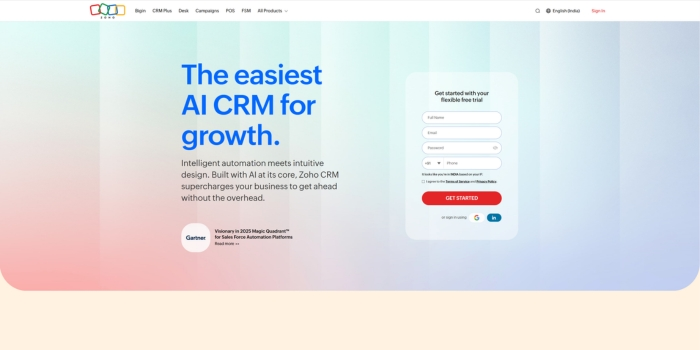
It's a cloud-based Customer Relationship Management tool that provides you with a business intelligence and reporting platform that unifies data from Zoho CRM, Zoho Campaigns, and third-party sources into custom marketing and revenue dashboards and helps firms manage sales, marketing, and customer support in one central location.
A self-service
- Its AI assistant Zia recommends you closing deals and identifies at-risk possibilities based on communication patterns and deal history
- You can track buyer behavior across email, calls & web activity to expose engagement cues, in real-time
- Drag-and-drop report builder creates custom attribution models without SQL or data engineering support
- Lead scoring, follow-up reminders and pipeline stage updates are automated
Best for: B2B sales teams, mid-to-large, extended sales cycles and several stakeholders
Pricing: Free plan; premium plans start at $14/user/month
Who should use it: Sales managers, RevOps leads, CRM admins
The business problem it solves: Reps spend time on low-probability deals vs. accounts most likely to close
What it does best: AI-powered deal risk alerts and predictive lead scoring inside a completely customisable CRM
2.Pipedrive: Tracking deals and sales pipelines
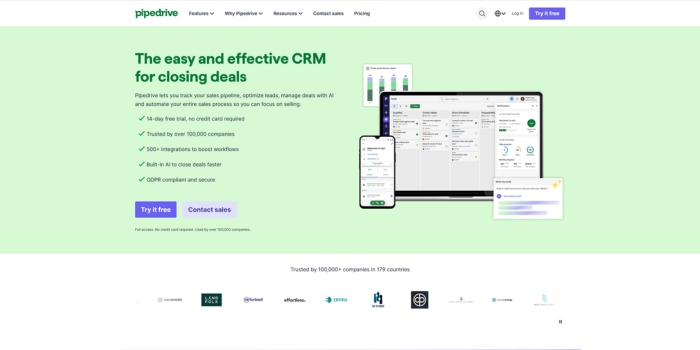
The platform is a sales CRM with a visual pipeline built to help sales teams track deals, automate follow-ups, and prioritize the right activities at every stage.
- It has a feature of visual drag-and-drop pipeline with activity recommendations based on each rep’s historical win rates—AI-driven
- Your prospecting deals stay hot with automated reminders and follow-up nudges
- The inbuilt-AI assistant suggests next best action for each open deal
Best for: Small to mid-sized B2B sales teams that want pipeline structure without the complexity of a CRM.
Pricing: From $14 per user each month
Who should use it: Sales reps, sales managers, founders controlling their own funnel
Business problem it solves: Deals stall because salespeople don’t have a clear, prioritized action sequence
What it does best: Simple, intuitive pipeline management with AI-driven activity suggestions
B: AI Marketing tools for Content Creation
AI content creation solutions let marketers to write, edit, repurpose, and grow brand-aligned material across multiple media.
3. Jasper Create AI-powered marketing and website content
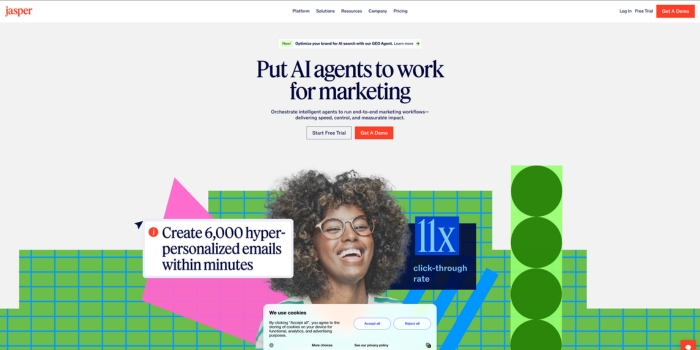
A platform for marketing teams that uses AI to generate brand-aligned text at scale for emails, advertisements, landing pages, and long-form content. Includes a built-in SEO mode that leverages live search intent and competitor data to optimize content.
- There is a fascinating feature of brand voice that trains the model on existing content to maintain consistent tone across all outputs
- ts SEO mode hooks into live search data, finds semantic holes, and recommends related terms for topical authority.
- Create emails, ads, landing pages and social copy at scale from one brief
- Writes SEO-optimized drafts that center around the questions and subtopics that drive rankings
Best for: Marketing teams producing high volumes of campaign assets across multiple channels
Pricing: Starts at $49/month
Who should use it: Content marketers, demand generation teams, brand managers
What business problem it solves: Content output falling behind campaign demand without adding headcount
What it does best: Brand-consistent, high-volume content production with built-in SEO optimization
4. Copy.ai: Generate write-ups and campaign messaging
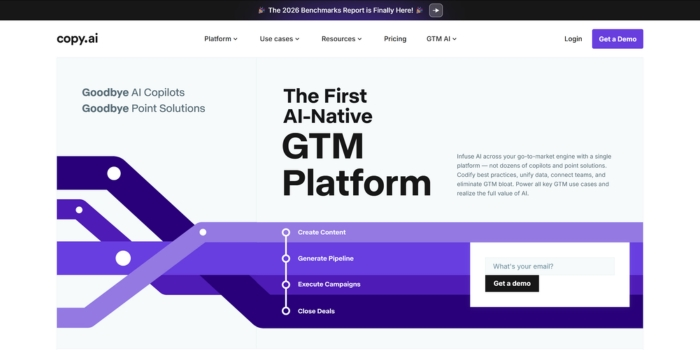
This platform is a copywriting & workflow automation AI tool that helps performance marketers generate short-form copy & build multi-step content pipelines at speed.
- It can help you generate short copy for ads, emails and social posts from one input
- Its workflow automation feature creates multi-step content pipelines. For example, take a single product brief, generate five ad variations from it, and send them to a review queue.
- Ready-made templates for product descriptions, cold outreach, and landing page copy
Best for: Performance marketers and growth teams running high-frequency ad and email campaigns
Pricing: Free plan available; paid plans start at $49/month
Who should use it: Copywriters, performance marketers, growth teams
What business problem it solves: Slow copy turnaround bottlenecking campaign launches
What it does best: Fast, automated short-form copy generation with multi-step workflow automation
5.Canva: Design professional visuals and creatives
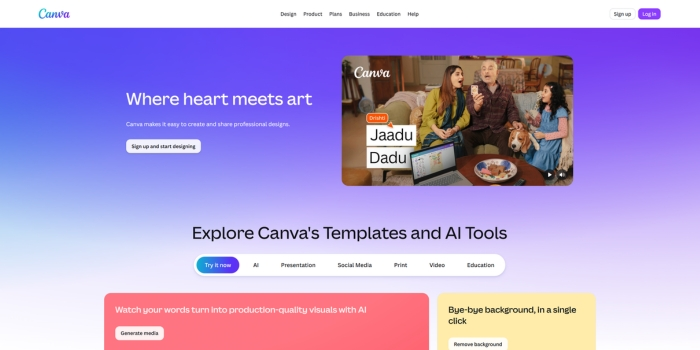
A browser-based visual design platform that empowers non-designers to create professional marketing assets using AI-assisted templates, editing tools, and brand controls.
- The Magic Design creates branded templates from a text prompt
- Magic Edit Describes modifications to existing images and there is no layer manipulation required
- A section of Brand Kit ensures that the logo, color and font are consistent across all assets your team creates
Best for: Marketing teams that need professional visual content without a dedicated designer
Pricing: Free plan available; Canva Pro at $15/month
Who should use it: Social media managers, content teams, brand managers
What business problem it solves: Design bottlenecks slowing down content publishing schedules
What it does best: Scalable visual content creation with AI-assisted design and brand consistency controls
6.DALL·E: Generate custom AI images
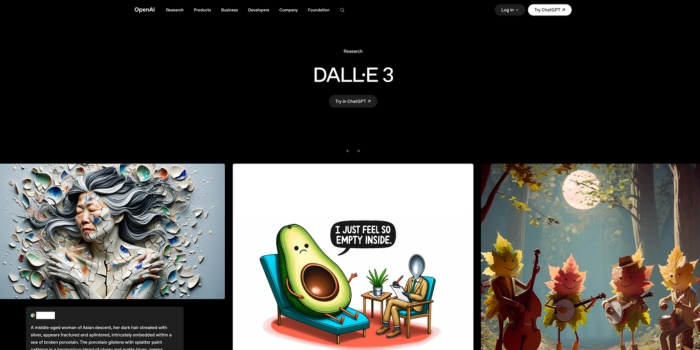
OpenAI's simple text-to-image AI model that produces personalized, one-of-a-kind graphics, eliminating the need for stock photography or design assets. Around 2024-2025, people noticed its properties very well.
- Generate one-of-a-kind, custom graphics from text prompts in seconds
- Creates product images, concept illustrations and social graphics without utilizing stock picture licensing
- Integrated into ChatGPT-powered and other OpenAI-powered workflows
Best for: Teams that need custom visuals quickly without a design or photography budget
Pricing: Included with ChatGPT Plus ($20/month); API pricing based on image resolution
Who should use it: Content creators, social media managers, marketers building visual assets at speed
What business problem it solves: Dependency on stock photography and slow creative turnaround for visual assets
What it does best: On-demand custom image generation from plain-text descriptions
C: AI Marketing tools for Email Marketing
AI email marketing technologies enable organizations to tailor messages, automate sequences, segment audiences, and enhance conversions.
7. Mailchimp: Create and automate email marketing campaigns
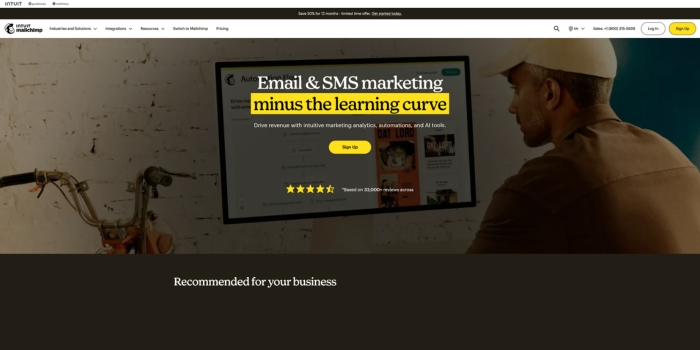
An email marketing and automation platform with AI-driven segmentation, send-time optimization, and campaign analytics to help expanding teams enhance email performance.
- Predictive segmentation that identifies contacts most likely to convert based on purchase history and engagement behaviors
- Subject line assistance compares A/B testing to historical open rate data
- Send-time optimization ensures your email is delivered when each specific contact is most likely to open it.
Best for: Small medium businesses and growing marketing teams running email campaigns and basic automation
Pricing: Free plan available; paid plans start at $13/month
Who should use it: Email marketers, small business owners, marketing managers
What business problem it solves: Low open and conversion rates from untargeted, manually timed email sends
What it does best: AI-powered segmentation and send-time optimization for higher email engagement
8. Omnisend: Run e-commerce email and SMS marketing campaigns
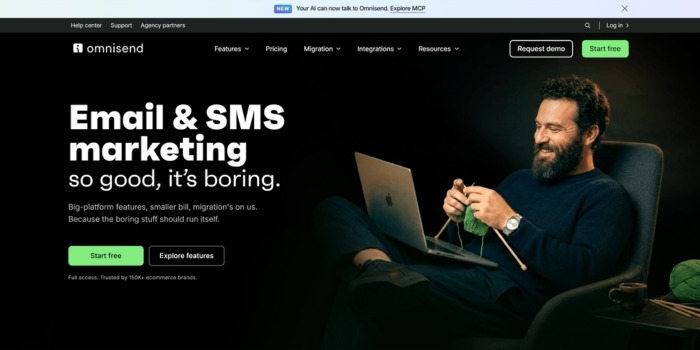
It's a cross-channel marketing automation tool that merges email, SMS and push alerts into unified behavioral workflows for e-commerce and SaaS businesses.
- Combine email, SMS and push notifications in one cross-channel automation workflow
- Behavioral triggers that are automatic and based on user activities such as cart abandonment, product views, and signup events.
- Pre-filled automation templates for onboarding, re-engagement, and post-purchase flows
Best for: E-commerce and B2B SaaS teams managing multi-channel onboarding and retention sequences
Pricing: Free plan available; paid plans start at $16/month
Who should use it: Marketing automation managers, e-commerce teams, SaaS growth marketers
What business problem it solves: Disconnected email and SMS touchpoints, which ends up creating inconsistent customer communication
What it does best: Cross-channel automation that triggers the right message on the right channel based on user behavior
9. HubSpot: automate Email Marketing & CRM-connected email campaigns
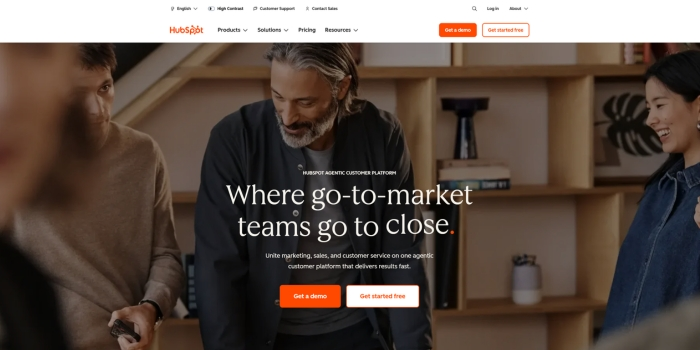
HubSpot’s native email marketing solution connects every email to your CRM contact data, lead scoring, and sales follow-up. And built-in campaign reporting and revenue attribution ties email, advertisements, social, and content touchpoints to pipeline and closed transactions.
- Lives inside HubSpot CRM, so every email interaction updates contact records, lead scores, and sales follow-up logic automatically
- Behavioral Triggers adds contacts to nurture sequences based on email engagement signals. A notification can be sent to a sales rep, for example, if a prospect visits a pricing page 3 times within 48 hours.
- Smart content personalization, comprehensive performance reporting, A/B testing, media play/pause
- Campaign performance dashboards connect email, ads, social, and content performance to pipeline and closed revenue
- Custom report builder allows marketing leaders to create board-ready ROI reports
Best for: B2B marketing and sales teams that need email tightly connected to CRM and pipeline data
Pricing: Free plan available; Marketing Hub starts at $800/month for full automation features
Who should use it: Marketing ops teams, demand generation managers, revenue teams
What business problem it solves: Email campaigns running in isolation from CRM data, creating gaps in lead handoff and follow-up timing
What it does best: CRM-native email marketing where every open, click, and conversion feeds directly into sales workflows
D: AI Marketing tools for Paid Advertising
Powered by AI, paid advertising tools enable marketers to automate campaign administration, optimize bidding, increase audience targeting, and boost ad effectiveness across channels.
10. Google Ads: Run performance campaigns
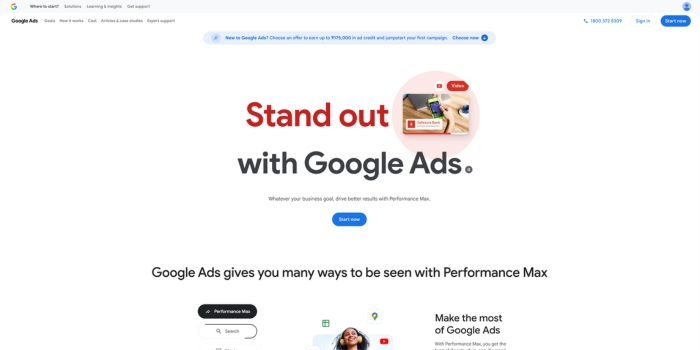
Google’s AI-powered advertising platform leverages machine learning to optimize bids, automate creative testing, and run campaigns across Search, Display, YouTube, Gmail, and Maps from a single interface.
- Machine learning-powered real-time bid optimization across device, location, time of day, audience group, and query intent
- Single campaign structure for Performance Max campaigns across Search, Display, YouTube, Gmail, and Maps
- Responsive Search Ads identify the most effective combinations of headlines and descriptions to determine the top-performing versions.
Best for: B2B and B2C teams operating search and display campaigns with conversion-focused objectives
Pricing: Pay per click, no platform fee. Minimum budgets vary based on campaign type
Who should use it: Paid search managers, performance marketers, growth teams
What business problem it solves: Manual bid management is not fast enough to react to real-time auction signals, leading to overspend or missed conversions
What it does best: Uses conversion data and audience indications to optimize bids in real time across the whole Google network
11. Meta Advantage+: Automate paid campaigns Meta apps
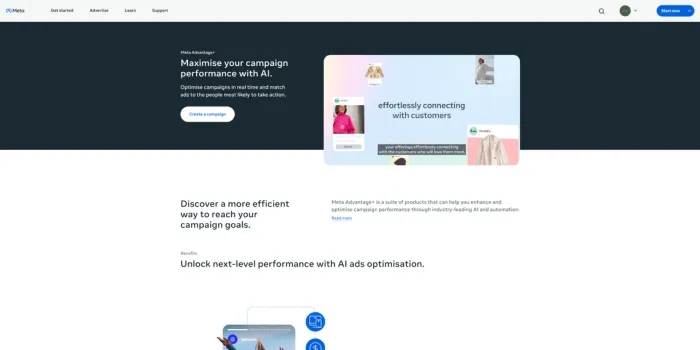
Meta’s AI-powered paid social engine that automates creative testing, audience expansion, and budget allocation across Facebook and Instagram to maximize campaign ROAS.
- Automates creative ad format testing to see which images, headlines and CTAs engage with particular audience segments
- Audience expansion employs AI to identify persons outside the target audience with comparable conversion behavior
- Budget allocation automatically moves to the top-performing ad sets in a campaign
Best for: B2C and B2B teams implementing paid social campaigns on Facebook and Instagram
Pricing: Pay per click/impression, no platform fees.
Who should use it: Paid social managers, performance marketers, e-commerce growth teams
What business problem it solves: Algorithmic optimization is better than manual creative testing and audience management, which takes time.
What it does best: Automated creative testing and audience expansion that drive ROAS, without lifting a finger.
E: AI Marketing Tools for Social Media Management
AI social media solutions assist in planning, generating, scheduling, monitoring, and optimizing content across various platforms.
12. Hootsuite: Manage social media publishing and monitoring
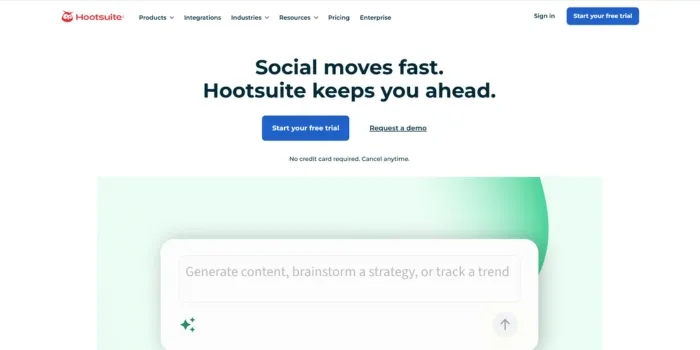
A centralized social media management platform that allows teams to schedule, publish, and analyze content on all major social channels from one dashboard.
- Schedules and publishes content across all major social platforms from a single dashboard
- AI writing assistant generates captions and post variations from a brief
- Analytics dashboard tracks engagement, reach, and follower growth across channels
Best for: Mid-to-large marketing teams managing high-volume social publishing across multiple brands or regions
Pricing: Starts at $99/month
Who should use it: Social media managers, agency teams, enterprise marketing departments
What business problem it solves: Fragmented social publishing across platforms creating inconsistent posting cadence and missed scheduling
What it does best: Centralized multi-platform scheduling and publishing at scale
13. Sprout Social: Manage Social Media Engagement and Analytics
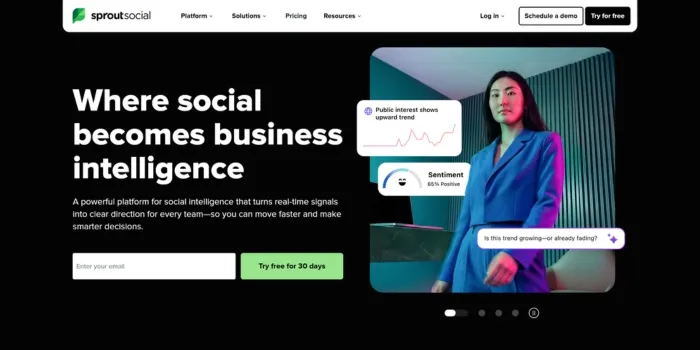
It is best for an enterprise, as Sprout AI helps them manage their social media and combine publishing, social listening, and analytics to connect social activity to measurable business outcomes.
- A social listening tool analyzes millions of conversations for new themes and brand mentions in real-time
- Links organic social performance to business outcomes, pipeline influence, share of voice, sentiment trends—Reporting suite
- Smart Inbox collates messages and comments from all platforms into one queue
Best for: Enterprise marketing and communications teams that need social listening alongside publishing and analytics
Pricing: Starts at $249/month
Who should use it: Social media strategists, brand managers, communications leads
What business problem it solves: Inability to track what audiences are saying about the brand and connect social activity to revenue impact
What it does best: Deep social listening and enterprise-grade analytics that tie social performance to business outcomes
14. Metricool: Schedule Posts and Track Social Media Performance
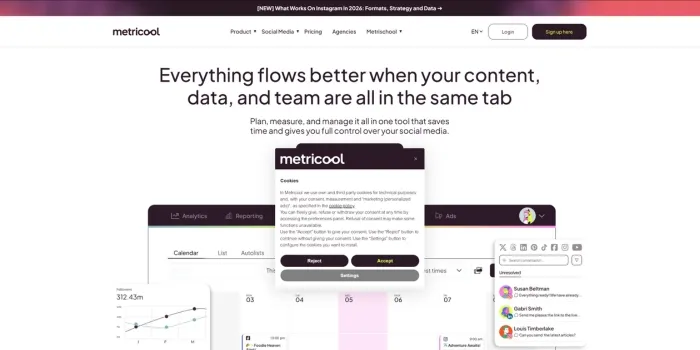
A full-featured social media and paid advertising analytics platform that compares your organic and paid channel performance to your competitors.
- Benchmarks organic & paid performance against competitors on Instagram, LinkedIn, TikTok, Google Ads & Meta Ads
- Unified dashboard for scheduling, analytics, and paid reporting in one view
- Hashtag and posting time suggestions based on account-specific data
Best for: Marketing teams and agencies that need competitor benchmarking alongside their own performance data
Pricing: Free plan available; paid plans start at $22/month
Who should use it: Social media managers, digital marketing agencies, growth marketers
What business problem it solves: Optimizing social and paid performance without visibility into how competitors are performing on the same channels
What it does best: Competitor benchmarking across organic and paid channels in a single, affordable dashboard
15. Brand24 Monitor Brand Mentions and Online Conversations
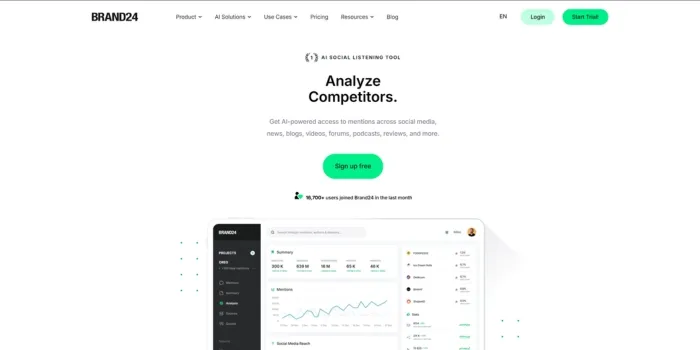
It's a real-time media monitoring tool that helps you track brand mentions across social media, news, blogs, forums, and review sites and measures sentiment at scale.
- Live monitoring of your brand mentions on social media, forums, review sites, news outlets and blogs
- Sentiment analysis provides a positive, negative or neutral sentiment score for each mention and tracks sentiment trends over time
- Alerts surface sudden spikes in volume of mentions, indicating a PR opportunity or reputational risk
Best for: Brand managers and PR teams that need real-time visibility into how their brand is being discussed online
Pricing: Starts at $119/month
Who should use it: Brand managers, PR leads, marketing directors
What business problem it solves: Missing earned media opportunities and reputational risks because brand mentions go untracked across the web
What it does best: Real-time brand mention monitoring and sentiment tracking across the entire web
F: AI Marketing Tools For SEO
AI SEO tools can help you with keyword research, content optimization, technical audits, SERP analysis, and ranking enhancement.
16. Semrush: Keyword Research and Improve SEO Performance
A complete SEO and competitive intelligence platform that offers keyword research, content auditing, backlink analysis, and AI search optimization in one suite.
- Keyword Magic Tool contains over 25 billion keywords, which can be filtered by intent, difficulty and presence of a SERP feature
- AI overview and featured snippet inclusion content structure using topic clusters and question-based keyword tools
- Competitive gap analysis identifies keywords that your competitors rank for, but your site doesn’t
- Content audit to identify underperforming pages and suggest optimization actions
Best for: SEO specialists and content teams building search visibility across competitive B2B categories
Pricing: Starts at $139.95/month
Who should use it: SEO managers, content strategists, digital marketing leads
What business problem it solves: Publishing content that doesn't rank because it lacks keyword depth, topical authority, or competitive differentiation
What it does best: End-to-end SEO - from keyword research and competitor analysis to content auditing and AI search optimization
17. Yoast SEO: Optimize WordPress Pages For Search Engines
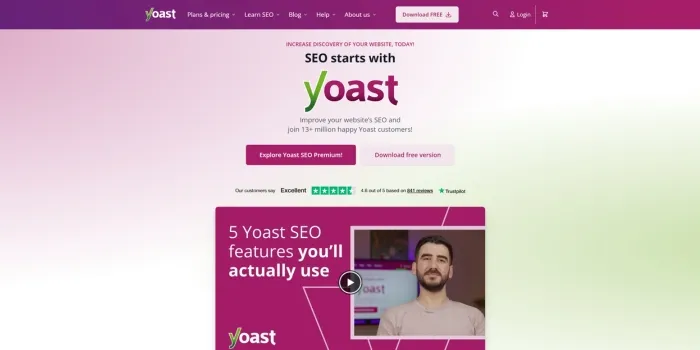
A WordPress SEO plugin that gives you real-time on-page optimization tips, schema markup tools, and internal linking suggestions inside the content editor.
- Readability issues, missing meta descriptions and keyword density problems identified within the WordPress editor
- Schema markup tools provide structured data to help AI systems understand and cite content properly
- Internal linking suggestions improve site architecture and page authority distribution
Best for: its best for WordPress-based content teams managing large volumes of blog and landing page content
Pricing: Free plugin available; Yoast SEO Premium at $99/year
Who should use it: Content managers, WordPress site owners, SEO specialists
What business problem it solves: On-page SEO errors going unnoticed across large content libraries, reducing search visibility and AI overview eligibility
What it does best: Real-time on-page SEO guidance and schema markup inside WordPress
G: AI Marketing Tools For Web Design
AI web design tools enable teams to build landing pages, websites, wireframes, and graphic layouts faster and with less manual work.
18. Framer: Build Modern No-Code Websites and Landing Pages
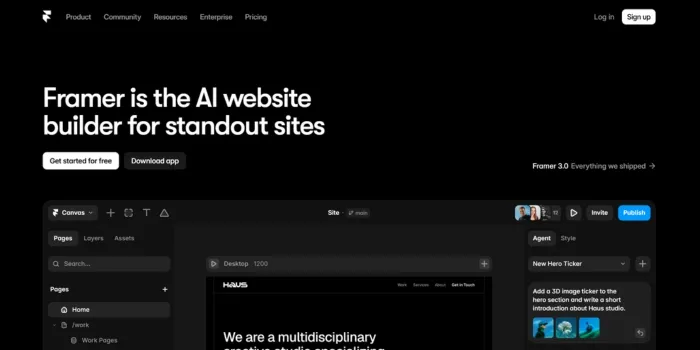
Framer is an AI-powered, no-code website and landing page builder that creates responsive layouts from text prompts and includes a built-in CMS and hosting for independent publishing.
- Create responsive website layouts from text prompts without coding
- AI component recommendations adhere to brand colours, fonts and spacing rules
- Built-in CMS and hosting allow marketers to publish and update landing pages independently
Best for: Marketing teams that need to build and iterate on landing pages without developer dependency
Pricing: Free plan available; paid plans start at $5/month
Who should use it: Growth marketers, content teams, marketing managers
What business problem it solves: Landing page backlogs caused by developer bandwidth constraints slowing down campaign launches
What it does best: Code-free, AI-assisted landing page and website creation with built-in publishing
19. Sketch: Design Website Layouts and Digital Interfaces

A vector-based UI/UX design tool for product and marketing design teams that require component-driven design systems and structured developer handoff.
- Vector design tool for UI/UX development with a component library framework that enforces design consistency
- Developer handoff tools export assets, specifications and CSS values directly to engineering teams
- Shared Libraries hold design tokens—colors, fonts, and spacing—that are the same across all product and marketing files.
Best for: Design teams building product interfaces and marketing design systems that need precise developer handoff
Pricing: Starts at $12/month
Who should use it: UI/UX designers, product designers, design leads
What business problem it solves: Design inconsistency across product and marketing touchpoints caused by fragmented file management and poor developer handoff
What it does best: Component-based UI design with structured developer handoff and shared design system management
20. Adobe XD: Create UX Designs and Interactive Prototypes
A prototyping and co-editing tool that turns static designs into interactive, clickable flows for stakeholder review and user testing before any development work begins.
- A tool for prototyping static designs into interactive clickable flows for user testing and stakeholder review.
- Auto-Animate allows you to preview micro-interactions without coding
- Co-editing allows multiple designers to work on the same file simultaneously
Best for: Design and product teams that need interactive prototypes for stakeholder sign-off before development begins
Pricing: Included with Adobe Creative Cloud plans starting at $54.99/month
Who should use it: UX designers, product managers, creative directors
What business problem it solves: Expensive development rework caused by stakeholders approving static designs that don't reflect real interaction behavior
What it does best: Interactive prototyping and co-editing for design review and user testing before any code is written
H: AI Marketing Tools For Video Creation
AI video creation tools let marketers create, edit, reuse, caption, and optimize videos for commercials, social media, and campaigns.
21. InVideo: Create Marketing & Social Media Videos
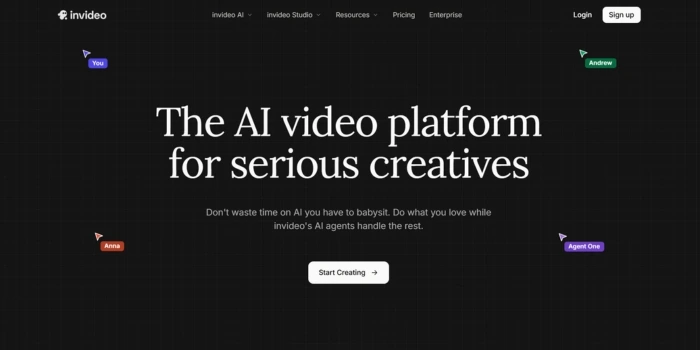
AI-driven video creation platform that turns scripts and written briefs into polished video assets with templates, AI voiceovers, and a library of stock media.
- Transforms scripts and written briefs into polished video assets using AI-matched templates
- Library of 5000+ templates for product explainers, social ads and educational content
- Multiple languages AI voiceover generator adds narration without recording
Best for: Marketing teams that need to produce video content at scale without a video production team
Pricing:Free plan available; paid plans start at $25/month
Who should use it: Content marketers, social media managers, demand generation teams
What business problem it solves: High cost and slow turnaround of traditional video production preventing consistent video publishing
What it does best: Fast, template-driven video creation from a script or brief with no production expertise required
22. OpusClip: Turn Long Videos Into Short-Form Social Clips
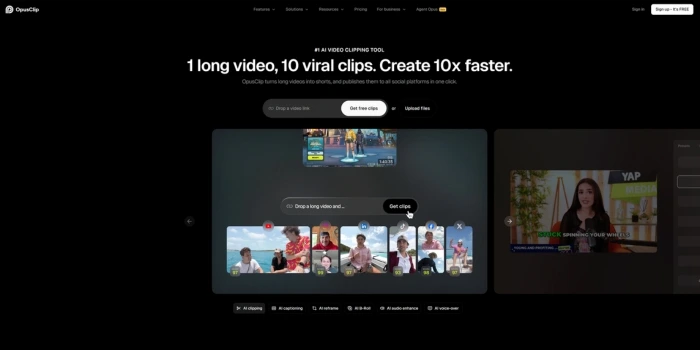
An AI video repurposing platform that automatically identifies the most engaging moments from long-form video and pulls them out as short-form clips optimized for social platforms.
- AI finds the most engaging parts of long-form video—webinars, interviews, podcasts—and extracts them into short clips
- automatically adds captions, reframes to vertical, and scores each clip by predicted engagement
- Parallel batch processing of multiple long-form videos
Best for: Content teams repurposing webinars, interviews, and long-form video into short-form social content
Pricing: Free plan available; paid plans start at $15/month
Who should use it: Content marketers, social media managers, video producers
What business problem it solves: Long-form video sitting unused because teams lack the time or tools to repurpose it into short-form social content
What it does best: Automated long-form to short-form video repurposing with AI-driven clip selection and vertical formatting
I: AI Marketing Tools For B2B Marketing
AI B2B marketing tools equip teams with the ability to locate high-intent accounts, generate qualified leads, improve prospect data, and tailor outreach to drive greater pipeline growth.
23. 6sense: Identify High-Intent B2B accounts
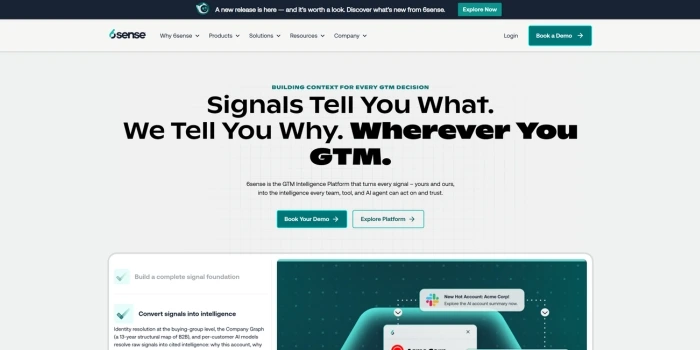
An AI-powered account-based marketing platform that identifies in-market accounts by tracking anonymous buying signals and mapping them to buying stages before any sales engagement starts.
- Tracks anonymous buying signals (content consumption, competitor research, category-level search activity) and maps accounts to buying stages
- Identifies in-market accounts before your sales team talks to them, so marketing can start warming them weeks in advance
- Provides intent data directly into CRM and marketing automation workflows for coordinated outreach
Best for: Enterprise B2B marketing and sales teams running account-based marketing programs
Pricing: Custom enterprise pricing
Who should use it: ABM managers, demand generation leads, revenue operations teams
What business problem it solves: Sales outreach landing too early or too late because teams have no visibility into where accounts are in their buying journey
What it does best: Predictive intent data that identifies in-market accounts before they self-identify
24. Apollo: Find B2B Leads and Run Outbound Sales Outreach
A B2B sales intelligence and outbound automation platform with a database of more than 275 million contacts and built-in sequencing tools for multi-step outreach across email, LinkedIn, and phone.
- 275M+ contacts database, filterable by job title, company size, technology stack, funding stage and geography
- Automated outbound sequences with email, LinkedIn & call steps all in one workflow
- Engagement Analytics: Open rates, reply rates, and meeting bookings at the sequence level.
Best for: Mid-market B2B sales and marketing teams building outbound prospecting programs at scale
Pricing: Free plan available; paid plans start at $49/month
Who should use it: SDRs, sales managers, growth marketers running outbound campaigns
What business problem it solves: Outbound teams wasting time on manual prospecting and list building instead of engaging qualified contacts
What it does best: Large-scale outbound prospecting with a deep contact database and automated multi-step sequences
25. Demandbase: Run Account-Based Marketing Campaigns
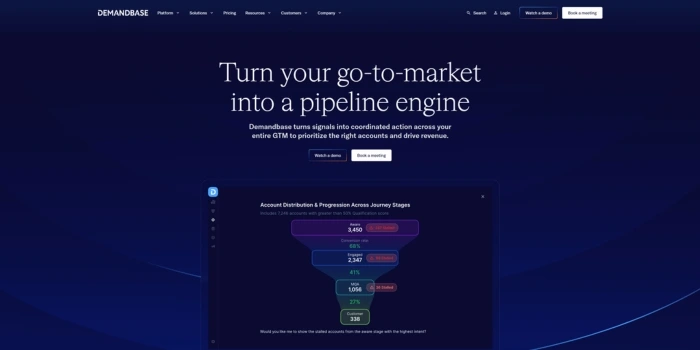
An enterprise ABM platform that targets high-value account buying committees across channels using account-level intent data and targeted B2B advertising. An enterprise ABM platform that targets high-value account buying committees across channels using account-level intent data and targeted B2B advertising.
- Combines account-level intent data with targeted B2B advertising, allowing teams to serve ads specifically to buying committees at target accounts
- CRM orchestration syncs account intelligence into Salesforce and HubSpot for coordinated sales and marketing action
- Account scoring models rank accounts by fit, intent, and engagement to prioritize outreach
Best for: Enterprise B2B marketing teams running account-based advertising and multi-channel ABM programs
Pricing: Custom enterprise pricing
Who should use it: ABM strategists, enterprise demand generation leads, marketing operations teams
What business problem it solves: Marketing spend reaching the wrong audiences because campaigns target personas rather than specific high-value accounts
What it does best: Account-level intent data combined with targeted B2B advertising for precision ABM execution
J: AI Marketing tools for SaaS Marketing
AI SaaS marketing solutions can help enhance onboarding, product acceptance, user engagement and retention, and lifecycle communication.
26. Customer.io: Automate SaaS Customer Messaging
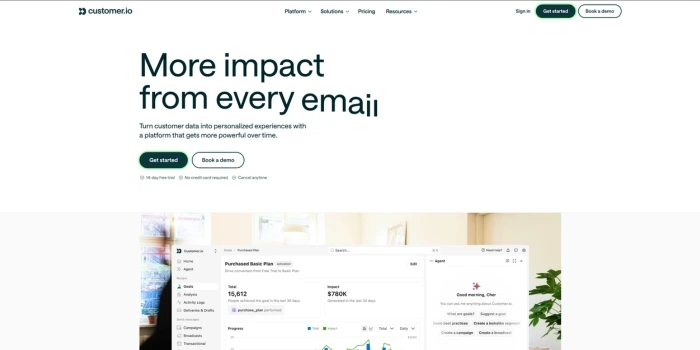
A behavioral messaging platform that sends personalized emails, SMS, push notifications, and in-app messages based on real user activity inside the product.
- Sends behavioral emails and in-app messages based on user activities—feature activations, inactivity thresholds, upgrade events
- Visual workflow builder covers the complete lifecycle communication sequence from trial to renewal
- Supports Email, SMS, Push alerts and in-app messaging from one platform
Best for: SaaS organizations with product-led growth and lifecycle communication throughout the whole customer journey.
Pricing: Starting at $100/month
Who should use it: SaaS growth marketers, lifecycle marketing managers, product marketing teams
What business problem it solves: Generic communication and no triggers based on real in-product behavior that causes the users to churn or not activate
What it does best: Behavior-triggered lifecycle messaging that adapts to what consumers really do in the product
27. Pendo: Analyze Product Usage and Improve User Adoption
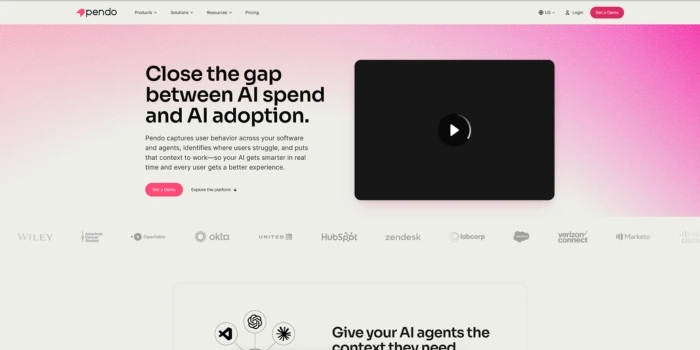
Product analytics and in-app engagement tools for tracking feature adoption, guided onboarding, and capturing user feedback without engineering effort.
- Tracks product adoption, session behavior and engagement patterns
- Guides and tooltips in-app give onboarding help and feature announcements; no engineering support required
- NPS surveys and feedback collecting are built into the product experience
Best for:Marketing teams or SaaS product teams who want to know how people utilize a product and where they drop off
Pricing:Free tier; premium tiers are custom-quoted.
Who should use it: Product managers, customer success teams, product marketers
What business problem it solves: Poor onboarding and lack of insight into where customers get stuck lead to low feature adoption and high turnover
What it does best: In-product analytics and guided onboarding that drive activation & feature adoption
K: AI Marketing tools: Chatbots
AI chatbot platforms let businesses automate interactions, answer consumer queries, qualify leads, and support customers in real time.
28. Manychat: Automate Chatbot Conversations and Lead Capture

A conversational marketing automation platform that turns Instagram DMs, Facebook Messenger, and WhatsApp interactions into automated lead qualification and capture flows.
- Automates conversational flows across Instagram DMs, Facebook Messenger, and WhatsApp
- Triggered by post comments, story replies, or direct messages—responds instantly, qualifies the lead, collects contact information, and routes to a sales sequence
- Visual flow builder requires no coding; drag-and-drop logic branches handle multiple conversation paths
Best for:B2C and B2B teams converting social media engagement into qualified leads without manual follow-up
Pricing:Free plan available; paid plans start at $15/month
Who should use it: Social media managers, growth marketers, sales development teams
What business problem it solves: Social engagement generating interest but no leads because there is no automated follow-up mechanism
What it does best: Turning social media comments and DMs into automated lead qualification and capture flows
L: AI Marketing Tools For Marketing Analytics
AI marketing analytics tools enable marketers to measure campaign performance, understand customer behavior, and link marketing activity to business results.
29. GA4: Track Website Traffic and User Behavior
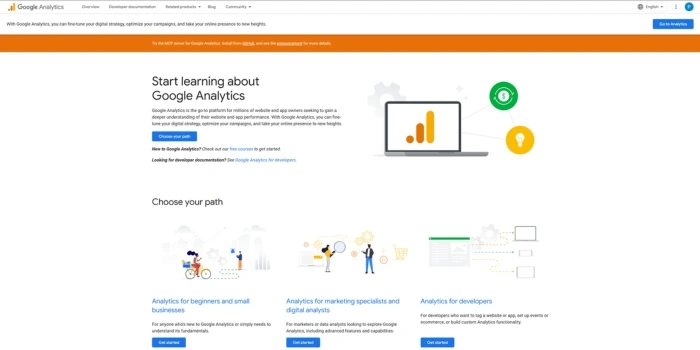
Google’s event-based web and app analytics platform combines AI-powered anomaly detection, predictive audiences, and cross-device tracking to give marketing organizations a full-funnel view of user behavior.
- Anomaly detection can help artificial intelligence uncover unexpected patterns in traffic, engagement, or conversion rates before they multiply.
- Predictive audiences identify people most likely to buy or churn in the following 7 days.
- Its AI chat assistant enables data retrieval through plain English queries, allowing for questions like "Why did my conversions drop last week?"
- The Chatbot Traffic Tracking feature automatically classifies visits and clicks from AI tools such as ChatGPT, Gemini, and Claude into a dedicated "AI Assistant" channel.
Best for:Any marketing team that need a basic web and app analytics platform
Pricing: Free; GA4 360 (business) from $50,000/year
Who should use it: Marketing analysts, web managers, growth teams, CMO’s
business problem solved: Not knowing how users flow through the site, where they drop off and which channels are truly driving conversions
What it does best: Predictive audience modeling & AI-powered anomaly detection for end-to-end web behavior tracking
Conclusion
AI marketing tools are no longer a competitive advantage. They are operational infrastructure, the same way CRM systems and email platforms became non-negotiable a decade ago. The companies treating them as optional are already falling behind on speed, efficiency, and output quality.
No leadership team should attempt to adopt everything at once. The smarter move is to identify where your current bottlenecks are costing you the most, whether that is slow content production, poor lead qualification, or weak attribution, and start there.
The models will get sharper, the integrations tighter, and the gap between early adopters and late movers wider. In the next 12 to 18 months, your organization’s decisions about AI marketing infrastructure will shape your competitive position for years to come.
Automate your business processes now!
Optimize every customer touchpoint using AI-driven insights, testing, and conversion strategies built to turn more visitors into customers.



Your SEO, on autopilot
Saffron OS runs 15+ AI agents that audit your visibility across Google, ChatGPT, Gemini and Perplexity every day — then fix what's broken, automatically. Built over 18 months. Results in 2–15 minutes.
Explore Saffron OSFrequently Asked Questions
Which AI marketing tools are actually worth using in 2026, and which are overhyped?

Tools that connect to real workflows like SEO, ads, CRM, analytics, and content ops tend to hold up better than standalone “magic” generators. The overhyped ones usually look impressive in demos but fail when teams need consistent brand output, integrations, or measurable lift.
How do I choose the right AI tool for my actual marketing bottleneck?
Start with the bottleneck, not the category: content, paid media, reporting, automation, or creative production. The right tool is the one that removes the most friction in your current workflow, not the one with the longest feature list.
Why do AI marketing tools feel great at first but fail after a few weeks?
The early win is usually speed, but the problem shows up when outputs start getting repetitive or disconnected from the brand. Many tools never move past generic generation because they are not built to retain context, standards, or review logic.
How do I stop AI tools from producing content that sounds generic or off-brand?
You need a tighter brand system: voice rules, banned phrases, audience context, and examples of “good” outputs. Without that layer, the model defaults to safe, average writing that sounds like everyone else’s.
Why do so many AI marketing pilots fail to reach production?
Most pilots fail because teams test the tool in isolation instead of redesigning the workflow around it. Common blockers include unclear ownership, messy data, missing review steps, and a lack of a plan for how the output will be used in real campaigns.
How do I know if the problem is the AI tool or our broken marketing workflow?
If the same issues keep showing up across different tools, the workflow is usually the real problem. If the tool works in one channel but collapses in another, the issue is more likely fit, setup, or integration.
How do I measure whether an AI marketing tool is actually saving money?
Look at time saved, fewer manual steps, reduced agency or contractor spend, and whether output quality still converts. A tool only saves money if it improves performance or removes enough labor to offset its subscription and adoption cost.
Nishant Ahlawat

Nishant Ahlawat is a marketing professional with 6+ years of experience specializing in SaaS SEO, content strategy, and go-to-market (GTM) strategies. He has worked extensively with B2B SaaS companies to improve online visibility, build scalable content frameworks, and execute data-driven SEO initiatives. His expertise lies in driving proven results through search optimization, performance tracking, and strategic marketing planning tailored for SaaS growth. Nishant focuses on building and executing marketing strategies that strengthen organic presence, support product-led growth, and deliver measurable business outcomes. Outside of work, Nishant enjoys traveling to offbeat destinations, trekking in the mountains, and exploring local cultures and landscapes.
Related Blogs
We explore and publish the latest & most underrated content before it becomes a trend.



6 min read
Lead Nurturing Marketing Automation: How to Get Started
By Praveen Kumar

Subscribe to Saffron Edge Newsletter!


Your SEO, on autopilot
Saffron OS runs 15+ AI agents that audit your visibility across Google, ChatGPT, Gemini and Perplexity every day — then fix what's broken, automatically. Built over 18 months. Results in 2–15 minutes.
Explore Saffron OS