





10 Best SEO Audit Tools To Optimize Your Website


Aug 25, 2026

 19 min


Do you know the secret to high-ranking websites? Well, it all begins with a solid SEO audit. Your website’s SEO performance plays a major role in getting your business recognition on Google through the visibility parameter, regardless of whether you’re a digital marketer or business owner.
However, to explore areas for improvement, you’ll need SEO audit tools. These tools enable you to identify issues not visible to the naked eye, from technical glitches to on-page SEO errors that might be impacting your website’s rank on Google.
In the following guide, we’ll guide you through the best SEO audit tools of 2026, mentioning how each tool contributes to your website’s ranking and other performance metrics.
So, whether it’s about refining your SEO strategy or starting to work on the website performance, you’ll find tools that align with your needs perfectly.
Let’s read further to identify which tool will upgrade your SEO game.
What is an SEO Website Audit?
An SEO website audit helps you identify any discrepancies or blockers that hinder your website’s ability to rank on search engines. The audit covers a complete analysis of your website and includes the following:
- Technical SEO issues check, like broken links, page speed, and mobile optimization.
- Evaluation of on-page SEO factors, including meta tags, keyword optimization, and content quality.
- Backlink analysis to ensure they are healthy and that no harmful links are pointing to your site.
The primary goal of conducting an SEO audit is to produce a detailed list of fixes and optimizations that can contribute to the website’s performance improvement on search engines. Learn more about SEO Audit Services.
Why is an SEO Page Audit Important?
An SEO page audit exhibits emphasis on individual web pages rather than the entire site, like a website audit.
Page audits help in discovering elements that are blocking individual pages from achieving a higher ranking in search engine results. A few common factors analysed during page audit include:
- Keyword usage: Targeting relevant keywords without over-optimization of each page.
- Content quality: Ensuring content aligns with the search intent of users, is informative, and valuable.
- Meta tags & descriptions: Optimization of titles, headings, and meta descriptions for search engines and users.
- Internal linking: Improving crawlability and navigation by ensuring proper internal linking.
- User experience (UX): Review of page layout, desig,n and load speed for improved engagement.
Optimizing individual pages will contribute to higher rankings and more targeted traffic.
10 Best SEO Audit Tools For Websites
When picking the right SEO audit tool, various factors are considered, like the budget and the level of insight that the tool generates.
The table below gives a brief comparison to help you navigate and choose which tool best fits your website’ SEO requirements.
|
Tool name |
Rating |
Pricing |
Best for |
|
4.5/5 (G2) |
SEO Toolkit Pro: $139.95/mo |
All-in-one SEO & competitor research, including keyword research, rank tracking, backlinks, site audits and competitive analysis |
|
|
4.5/5 (G2) |
Free: $0 |
Backlink analysis & competitive SEO research, particularly link profiles, organic competitors and keyword opportunities |
|
|
4.3/5 (G2) |
Starter: pricing varies by current subscription offer |
SEO beginners & in-house teams needing keyword research, rank tracking, site crawling and link research in an accessible platform |
|
|
4.7/5 (G2) |
Free: $0, up to 500 URLs Paid: $279/year per license (Screaming Frog) |
Technical SEO crawling & audits, especially large-scale diagnosis of redirects, canonicals, metadata, indexing, internal links and technical issues |
|
|
N/A |
Free: $0 |
Monitoring Google organic search performance, including clicks, impressions, queries, indexing, crawling and Core Web Vitals |
|
|
4.2/5 (G2) |
Individual Lifetime: $290 Enterprise Lifetime: $990 |
Affordable keyword & competitor research for freelancers, small businesses and SEO beginners |
|
|
4.5/5 (G2) |
Lite: $18/mo |
Technical SEO audits with actionable recommendations, visualizations and detailed issue prioritization |
|
|
4.7/5 (G2) |
Enterprise: Custom |
Enterprise website quality & technical SEO, especially large websites requiring SEO, UX and site-quality monitoring |
|
|
4.6/5 (G2) |
Lite: $5.99/mo (GTmetrix) |
Website speed & Core Web Vitals analysis, including Lighthouse-based performance testing and ongoing monitoring |
|
|
4.3/5 (G2) |
Lite: $19.99/mo |
Quick SEO audits & client reporting, especially for agencies, SMBs and marketers needing easy-to-understand reports |
|
|
4.6/5 (G2) |
DIY SEO: $29/mo |
White-label SEO audits & lead generation, particularly for agencies wanting branded reports and an embeddable audit tool |
|
|
SEO Reports |
N/A |
Unable to verify exact vendor |
SEO reporting & website audit reports |
1. SEMrush

SEMrush is the most preferred and an all-in-one SEO tool that offers extensive features like site audit, keyword tracking and comprehensive competitor analysis. It’s mainly known for its reporting capabilities and vast database.
Features:
- Comprehensive site audit with actionable insights
- Keyword tracking and rank monitoring
- Backlink audit and analysis
- On-page SEO recommendations
- Traffic analytics and competitor analysis
Pros
- In-depth, customizable reports
- Excellent keyword tracking tools
- Comprehensive competitor analysis
Cons:
- Expensive, especially for small businesses.
- The interface can be overwhelming for beginners.
What Makes It The Best:
SEMrush is proficient in offering comprehensive reports on both on-page and technical SEO issues. Its competitor analysis feature enables you to track your rival’s performance and identify opportunities to outperform them.
API connectivity
Semrush provides REST APIs covering SEO, traffic/market intelligence, local data, project information, keyword data, and competitive intelligence. Its current developer platform supports both API v3 and v4.
Semrush specifically supports workflows involving Zapier, Make, n8n, Google Sheets, Data Studio, Tableau, Power BI, BigQuery, Snowflake, Salesfolrce, HubSpot, and internal applications.
It also offers an official MCP Server, allowing Semrush data to be accessed by AI assistants and development environments, including ChatGPT, Claude, Perplexity, Cursor, and other MCP-compatible tools.
GA4 and GSC data can feed directly into multiple Semrush modules, including Position Tracking.
Compliance:
Supports GDPR, CCPA, and LGPD requirements and is independently certified to PCI DSS Level 1. No public ISO 27001 or SOC 2 certification is stated
2. Ahrefs
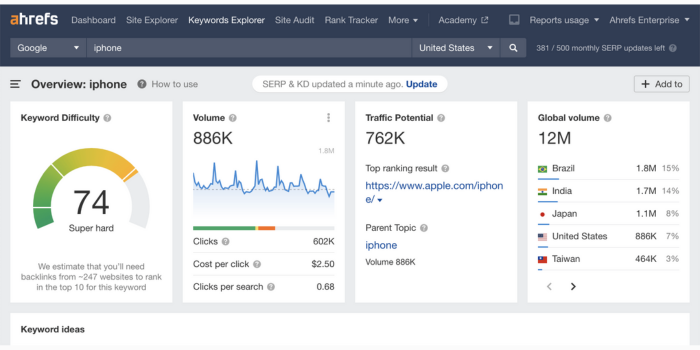
Ahrefs is a powerful SEO toolset best known for its industry-leading backlink analysis, keyword research, and robust site audit capabilities. With one of the largest backlink databases available, Ahrefs is a top choice for SEO professionals seeking deep insights into website performance and competitor strategies.
Features:
- Site audit with detailed technical SEO analysis
- Backlink analysis and Site Explorer
- Keyword research and rank tracking
- Content analysis and optimization recommendations
- Competitive analysis and traffic estimation
Pros:
- Best-in-class backlink analysis
- Large, frequently updated keyword and backlink databases
- Detailed competitor analysis tools
Cons:
- High cost compared to other SEO tools
- Lacks some on-page SEO features offered by competitors
What Makes It The Best:
Ahrefs is the go-to tool for backlink analysis thanks to its massive backlink database and accurate insights. It’s an excellent choice for businesses and SEO professionals focused on link-building strategies and competitor intelligence.
API connectivity
Ahrefs' API v3 currently supports data from Site Explorer, Keywords Explorer, Site Audit, Rank Tracker, SERP Overview, Batch Analysis, Brand Radar, Web Analytics, GSC Insights, and Social Media Management.
A major 2026 change is that direct API access is now available from Lite plans upward, rather than being restricted to Enterprise.
API endpoints can retrieve or manage information across Ahrefs tools, including Rank Tracker projects, Keyword Explorer lists, Site Audit, Brand Radar, GSC Insights, and social data.
Compliance:
Provides GDPR-oriented data-processing and security controls but states that its systems have not yet been independently certified; SOC 2 was listed as a future objective.
3. Moz Pro
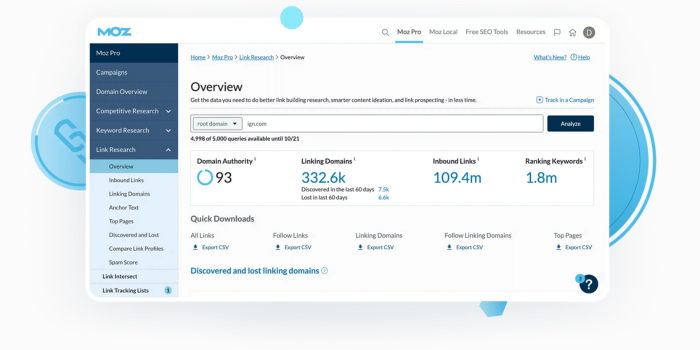
Moz Pro is a user-friendly SEO tool designed to help businesses monitor site health, optimize keywords, and improve on-page SEO performance. With its intuitive interface and guided workflows, Moz Pro is an excellent choice for beginners and mid-level marketers.
Features:
- Site crawl and audit
- Keyword tracking and on-page optimization
- Link-building and link research tools
- Page optimization and content recommendations
- Site performance metrics and SEO insights
Pros:
- Intuitive and beginner-friendly interface
- Reliable keyword tracking and ranking data
- Strong community support and learning resources
Cons:
- Limited crawl capacity in basic plans
- Missing advanced features like in-depth backlink and content gap analysis
What Makes It The Best:
Moz Pro stands out as the ideal SEO tool for beginners due to its easy navigation and strong on-page optimization features. It delivers clear, actionable insights that help improve website rankings and overall visibility.
API connectivity
Moz provides its Links API/Mozscape API, allowing external applications to retrieve link intelligence and Moz metrics such as Domain Authority and Page Authority.
The API can be connected to external SEO platforms and custom applications using Moz API credentials. Screaming Frog, for example, officially supports pulling Moz metrics directly into crawls.
A key distinction is that Moz API access is separate from a standard Moz Pro subscription, so teams requiring programmatic data access may need an additional API subscription.
Compliance:
Its privacy policy addresses GDPR and US state privacy rights, including California rights. No public SOC 2 or ISO 27001 certification was identified.
4. Screaming Frog
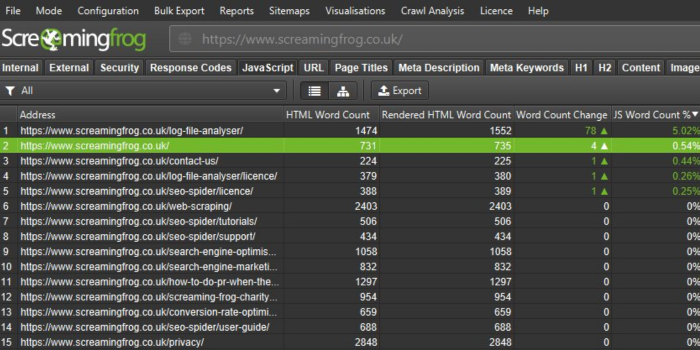
Screaming Frog is a powerful SEO crawler widely recognized for its advanced site crawling capabilities. It is especially well-suited for technical SEO audits of large and complex websites that require deep, granular analysis.
Features:
- Advanced site crawling and URL discovery
- Broken link detection
- Duplicate content and redirect analysis
- Metadata analysis and auditing
- Page speed and performance reports
- Integration with Google Analytics
Pros:
- Comprehensive technical SEO analysis
- Affordable pricing with a free version available
- Ideal for large and complex websites
Cons:
- Complex interface for beginners
- Lacks keyword tracking and backlink analysis
What Makes It The Best:
Screaming Frog stands out for uncovering technical SEO issues that other tools often miss. Its ability to crawl large-scale websites and provide detailed technical insights makes it a go-to solution for in-depth technical SEO audits.
API connectivity
It is primarily an API consumer, not a general-purpose public API provider.
Screaming Frog can connect directly to Google’s tools and Ahrefs, and AI APIs, including OpenAI, Gemini, Anthropic, and Ollama, allowing prompts and AI analysis to be executed against crawl data.
Screaming Frog is powerful as a technical SEO data aggregation layer, even though it is not positioned as a conventional cloud REST API platform.
Compliance:
Its privacy practices are structured around the UK GDPR and UK Data Protection Act 2018. No public SOC 2, ISO 27001 or PCI DSS certification is disclosed
5. Google Search Console
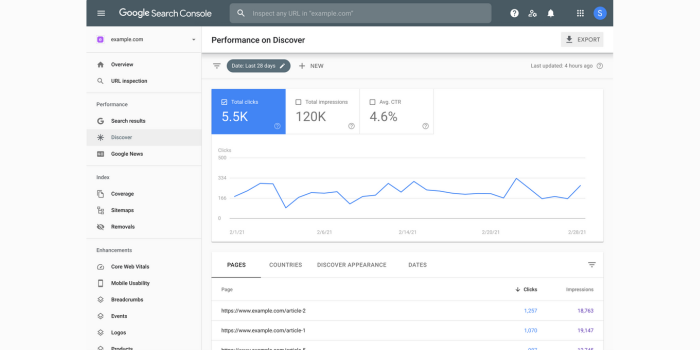
Google Search Console is a free SEO tool that helps website owners monitor indexing status, search traffic, and detect technical issues directly from Google. It offers essential insights into how a website performs in Google Search results.
Features:
- Performance tracking in Google Search
- Crawl errors and mobile usability reports
- Search query, clicks, and impression tracking
- Manual penalties and indexing status monitoring
- Core Web Vitals performance insights
Pros:
- Completely free to use
- Provides direct insights from Google
- Essential for monitoring website health and search performance
Cons:
- Limited advanced features compared to paid SEO tools
- Lacks in-depth backlink and content analysis
What Makes It The Best:
Google Search Console is indispensable for website owners because it delivers first-party data directly from Google. It helps identify and fix critical issues related to crawling, indexing, and search visibility, making it a foundational tool for any SEO strategy.
API connectivity
Google provides an official Search Console REST API that gives programmatic access to:
-
Search Analytics
-
Sites/properties
-
Sitemaps
-
URL Inspection.
The API uses OAuth 2.0 and JSON, making it suitable for custom dashboards, internal software, SEO platforms, reporting systems, and automated workflows. API usage is free, although Google applies usage and rate limits.
Google's property-based authorization structure allows developers to programmatically combine different types of first-party Google Search information.
Compliance:
Covered by Google’s privacy and security framework, including GDPR and CCPA-related protections. Google holds ISO 27001 and SOC certifications, but no Search Console-specific certification is published
6. Ubersuggest
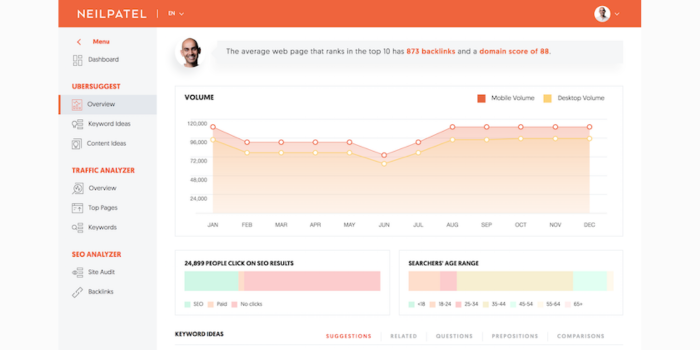
Ubersuggest is a beginner-friendly SEO tool created by Neil Patel that offers affordable SEO audits and keyword research capabilities. It’s an excellent option for startups, freelancers, and small businesses looking to perform basic SEO audits without high costs.
Features:
- SEO audit with actionable recommendations
- Keyword research and analysis
- Backlink tracking and analysis
- Rank tracking and SEO performance insights
- Competitor analysis
Pros:
- Affordable pricing with a free version available
- Simple and easy-to-use interface
- Provides useful keyword suggestions and SEO opportunities
Cons:
- Limited features compared to comprehensive tools like SEMrush or Ahrefs
- Smaller databases for backlinks and keywords
What Makes It The Best:
Ubersuggest strikes a strong balance between affordability and functionality. It’s ideal for businesses and individuals new to SEO who want actionable insights without the steep learning curve or high investment.
API connectivity
Ubersuggest's current pricing documentation explicitly states that it does not offer public API access plans.
However, the situation changed materially from an integration perspective in 2026.
Ubersuggest now provides an MCP Connector capable of exposing more than 37 SEO tools to MCP-compatible AI assistants such as Claude, Cursor, Windsurf, and others. Authentication uses OAuth 2.0, and the connection is read-only.
Ubersuggest has also launched a ChatGPT app, initially supporting live keyword research and allowing ChatGPT to retrieve Ubersuggest data during conversations.
Compliance:
NP Digital’s privacy notice addresses EU GDPR, UK GDPR, and applicable US privacy laws. No public SOC 2 or ISO 27001 certification for Ubersuggest was found.
7. Sitebulb
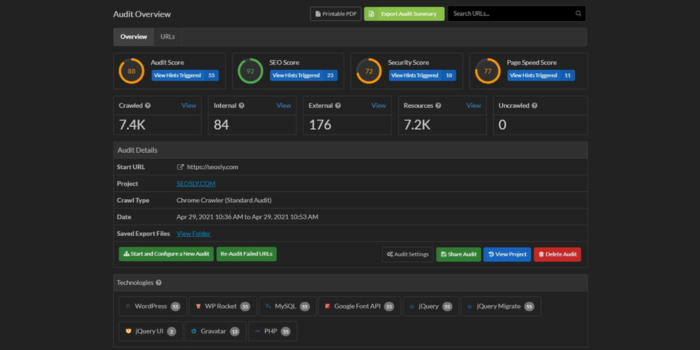
Sitebulb is a technical SEO auditing tool designed for SEO specialists who need deep insights presented in a clear, visual format. It transforms complex crawl data into intuitive graphs and reports, helping teams identify and prioritize critical SEO issues efficiently.
Features:
- In-depth website crawling and technical SEO analysis
- Visual audit reports with graphs and flowcharts
- Schema markup detection and validation
- Page speed and performance testing
- Mobile usability and accessibility audits
- Crawl comparison across multiple audits
Pros:
- Easy-to-understand data visualizations
- Ideal for detailed and technical SEO audits
- Flexible crawl configurations and scheduling options
- Seamless integration with Google Analytics and Search Console
Cons:
- Slight learning curve for new users
- Limited cloud-based capabilities (primarily a desktop tool)
- Lacks keyword tracking and backlink data
What Makes It The Best:
Sitebulb excels at visualizing complex SEO data, making even the most technical insights easy to understand. It’s especially valuable for SEO agencies and consultants who need to clearly communicate findings and recommendations to clients.
API connectivity
Sitebulb explicitly states that Sitebulb Cloud does not currently have a public API. However, aggregated data can be extracted through webhooks and its Data Studio Connector.
Sitebulb integrates directly with Google’s tools. Automated Google Sheets exports can also be combined with scheduled audits to power recurring dashboards and reporting workflows.
Compliance:
Publishes GDPR-oriented privacy controls, including anonymized IP collection and user data-management rights. No public SOC 2 or ISO 27001 certification is disclosed
8. Ryte
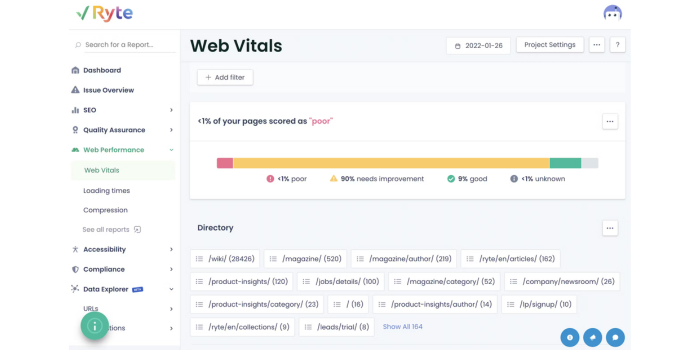
Ryte is a cloud-based SEO and website optimization platform known for its in-depth technical and content analysis. It is built for enterprise-level businesses that need to manage large, complex websites while maintaining high performance, compliance, and overall site health.
Features:
- Technical website audits for crawl errors, broken links, and metadata issues
- Keyword tracking and optimization recommendations
- Page speed and Core Web Vitals analysis
- Content quality scoring and duplicate content detection
- Site structure and accessibility monitoring
- Automated weekly performance and health reports
Pros:
- Combines content, technical SEO, and UX auditing in one platform
- Ideal for enterprise websites with complex architectures
- Cloud-based platform with team collaboration features
- Excellent visual dashboards and detailed reporting
Cons:
- Higher pricing compared to entry-level SEO tools
- Interface can be overwhelming for beginners
- Limited backlink analysis capabilities
What Makes It The Best:
Ryte is a top-tier solution for enterprise SEO, offering one of the most comprehensive website health dashboards available. Its ability to unify technical SEO, content quality, and performance monitoring makes it ideal for large-scale, high-traffic websites.
API connectivity
Ryte provides an API designed to extract report information and use Ryte data in external applications and business solutions.
Its API can automatically access data generated in Ryte's website analysis/reporting environment without requiring users to manually work through the interface.
Ryte has also supported integrations with Google Search Console and Google Analytics, which layer search and analytics information with website analysis data.
Compliance:
Operates under EU GDPR and German data-protection requirements, including consent, access, and deletion provisions. No public SOC 2 or ISO 27001 certification was identified.
9. GTMetrix
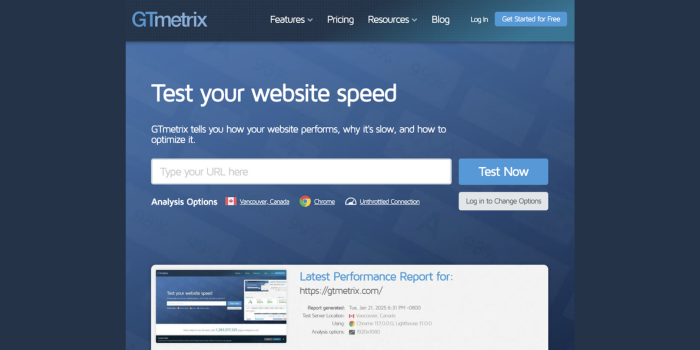
GTMetrix is a performance-focused tool designed to analyze website speed and overall performance. It provides detailed insights into factors affecting load times and offers actionable recommendations to improve Core Web Vitals and user experience.
Features:
- Comprehensive website speed testing and performance grading
- Detailed waterfall charts showing page load elements
- Page performance scores based on Lighthouse and GTMetrix metrics
- Recommendations for image compression, caching, and script optimization
- Global testing locations for performance comparison
- Historical performance tracking and analysis
Pros:
- Excellent tool for improving Core Web Vitals and site speed
- Free version available with strong performance insights
- Simple and intuitive interface
- Actionable recommendations with clear performance impact
Cons:
- Focused only on speed and technical performance
- No keyword or backlink analysis
- Advanced features like mobile testing require premium plans
What Makes It The Best:
GTMetrix is the go-to solution for website performance optimization. Since site speed and Core Web Vitals play a critical role in SEO rankings and user experience, GTMetrix is a valuable complement to broader SEO audit tools.
API connectivity
GTmetrix provides a REST API v2.0 that lets developers integrate website performance testing directly into applications and development environments. The API can start performance tests and retrieve report, test, and page information.
GTmetrix also introduced its MCP Connector in June 2026, giving AI systems direct access to the GTmetrix platform through its API.
The MCP can work with tools including ChatGPT, Claude, Cursor, and GitHub Copilot CLI, supporting OAuth- or API-key-based configurations depending on the implementation.
Compliance:
Maintains a GDPR-era privacy framework and is also subject to applicable Canadian privacy requirements through its Canadian operator. No product-specific SOC 2 or ISO 27001 certification is published
10. Woorank
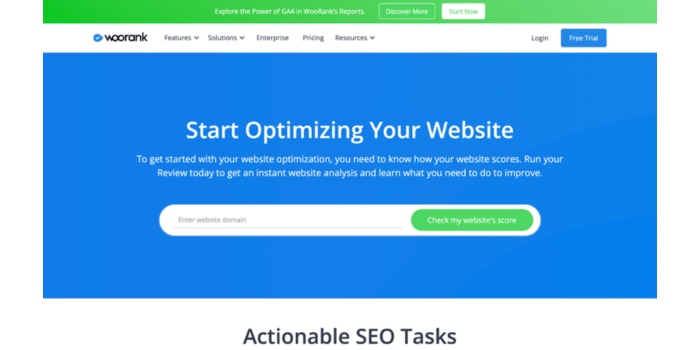
Woorank is an SEO audit and digital marketing analysis tool built for small businesses and agencies. It provides a clear, high-level overview of a website’s SEO, usability, and social media performance through an intuitive and easy-to-navigate interface.
Features:
- Automated SEO audits with actionable recommendations
- Keyword tracking and competitor benchmarking
- On-page SEO and mobile optimization analysis
- Technical SEO checks including robots.txt, redirects, and broken links
- Marketing, usability, and SEO scoring
- PDF and branded report generation
Pros:
- User-friendly dashboard suitable for all skill levels
- Affordable pricing for startups and small-to-medium businesses
- Strong competitor comparison features
- Downloadable, client-ready SEO reports
Cons:
- Lacks deep backlink analysis and advanced technical auditing
- Limited integrations with other marketing platforms
- Some reports may feel repetitive for advanced users
What Makes It The Best:
Woorank stands out by delivering a holistic SEO overview without overwhelming users with technical complexity. Its balance of SEO, marketing, and usability insights makes it an excellent choice for agencies and businesses managing multiple small clients.
API connectivity
WooRank provides a REST API that delivers website information as JSON for use in custom applications. Its Review API is specifically designed to let companies integrate automated SEO reviews and reporting into their websites or products.
WooRank also provides data services for custom API integrations and bulk reports.
Its agency workflows support Zapier, which can automate lead capture, generate WooRank Reviews, distribute reports, and pass lead information into CRM systems.
WooRank can additionally integrate Google Analytics data into its analysis environment.
Compliance:
Publicly documents GDPR compliance and follows Belgian data-protection authority guidance. No public SOC 2 or ISO 27001 certification was identified.
11. SEOptimer
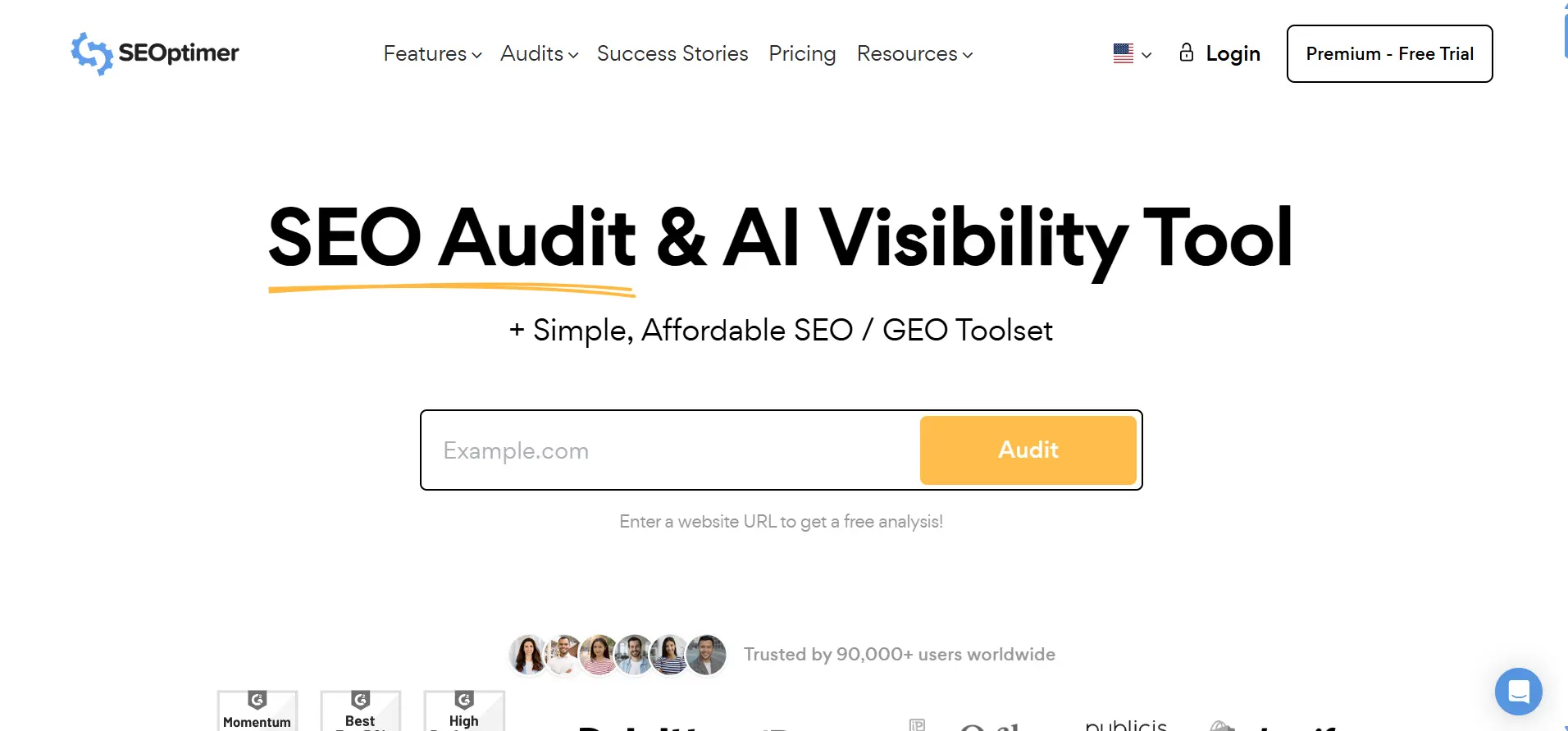
When you need to quickly identify technical and on-page SEO problems, create client-ready audit reports, and track ongoing SEO improvements without paying for a large enterprise SEO suite, SEOptimer provides an accessible audit and reporting solution for agencies, freelancers, marketers, and small businesses.
Features
-
Website SEO audits covering 100+ data points
-
Technical and on-page SEO analysis
-
GEO/AI visibility audits
-
White-label PDF reports
-
Embeddable SEO audit forms for lead generation
Rating - 4.6/5
Pricing:
-
DIY SEO: $29/month
-
White Label: $39/month\
-
White Label & Embedding: $59/month
SEOptimer also sells its SEO Audit API separately:
BR-API-1: $100/month, 500 reports
BR-API-2: $250/month, 2,500 reports
BR-API-3: $500/month, 10,000 reports.
Pros
-
Strong website auditing functionality
-
Affordable compared with larger all-in-one SEO suites
-
Particularly strong white-label reporting capabilities
-
API, Zapier, and webhook options make automated workflows possible
Cons
-
Less extensive than enterprise platforms such as Semrush or Ahrefs
-
Some users report limitations in the depth of available data
-
Not as strong for large-scale competitive intelligence or advanced keyword databases
Best for:
Agencies, freelancers, consultants, and SMBs that need quick SEO audits, white-label reporting, SEO lead generation, and straightforward ongoing website monitoring without the complexity or price of an enterprise SEO platform.
API connectivity
SEOptimer provides dedicated SEO Audit API and Rank Tracking API products. The SEO Audit API exposes 100+ SEO data points to custom applications, while webhooks deliver completed results to another system.
Its Embeddable Audit Tool supports Zapier, allowing lead information and audit activity to flow into systems such as HubSpot, Mailchimp, CRMs, email marketing platforms, and other Zapier-supported applications. Webhooks can also push lead or report data to external systems.
Compliance:
Provides a privacy policy covering personal data collection, processing, and user controls. No explicit SOC 2, ISO 27001, or other independent security certification is publicly disclosed.
12. SEOReport.ai
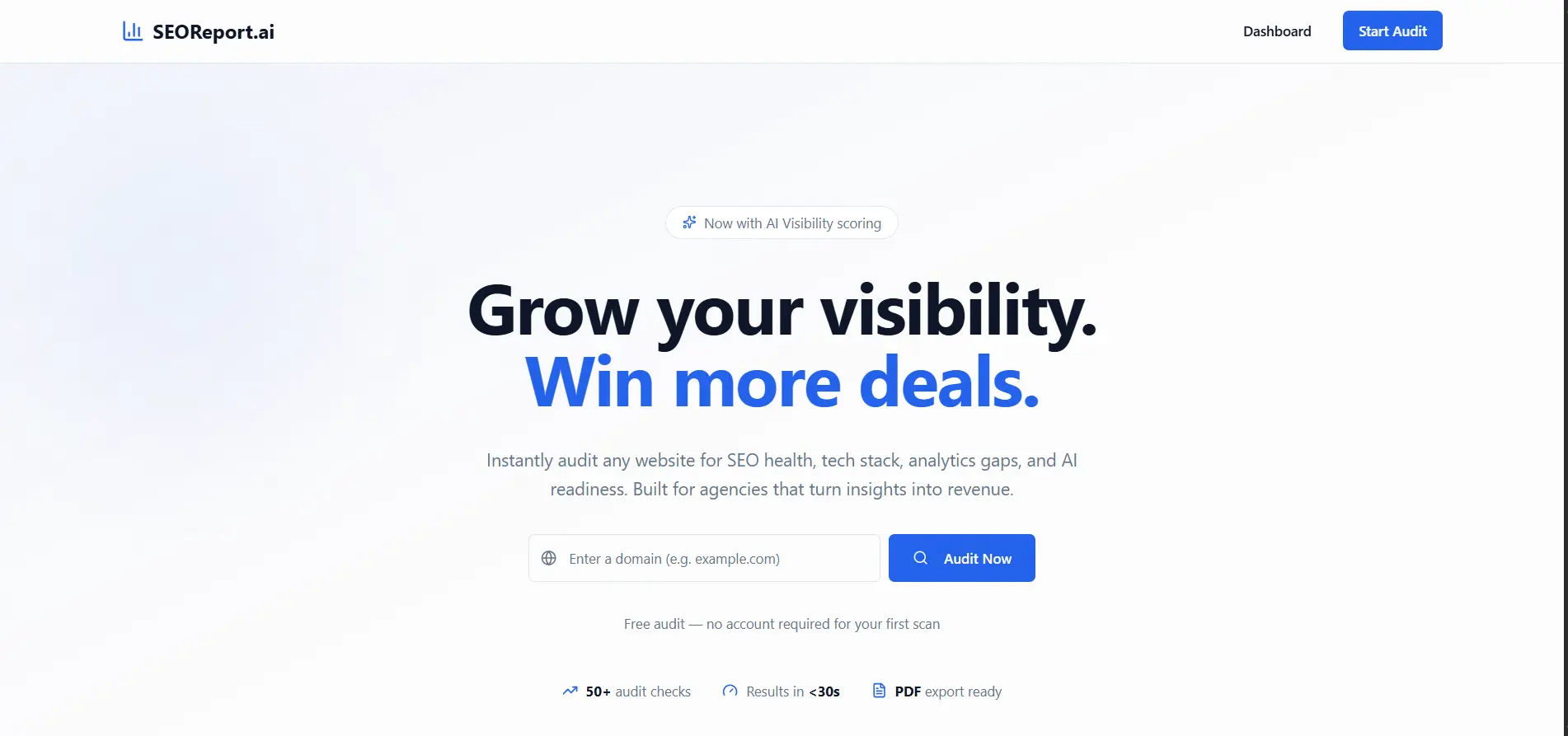
When agencies need to assess a prospect's website quickly before a sales call but do not have time to manually review SEO, performance, tracking, security, and technology issues across several tools, SEOReport.ai provides a fast website auditing system designed to turn those findings into agency-ready reports and sales opportunities
Features
-
50+ website audit checks
-
CMS detection scoring
-
Hosting, CDN, and framework detection
-
Conversion tracking audits
-
SSL and HTTPS checks
-
AI search readiness analysis
Rating: Not currently available
Pricing:
-
First audit: Free, no account required
-
Paid plans: Not publicly disclosed
Pros
-
Quick website auditing designed around agency workflows
-
Combines SEO, performance, tracking, security, and technology checks
-
50+ checks from a single domain scan
-
No account required for the initial audit
-
PDF reports designed for client and prospect presentations
-
Detects analytics and marketing technologies such as GA4, GTM, and Meta Pixel
Cons
Based on the capabilities currently disclosed publicly:
-
No publicly disclosed paid pricing structure
-
No verified rating on major software review platforms found
-
No publicly documented API
-
No publicly documented Zapier, Make, n8n, or similar automation integration
-
No clearly documented direct Google Search Console or GA4 data connection
-
Primarily positioned around rapid audits rather than deep keyword research, backlink intelligence, or rank tracking
Best for:
Digital marketing and SEO agencies that need fast prospect audits, sales-ready website reports, technology-stack analysis, and quick SEO opportunity identification before or during client acquisition conversations.
API availability:
No publicly used API found
Compliance:
No independently verifiable GDPR, CCPA, SOC 2, ISO 27001 or PCI DSS compliance documentation was found publicly. Enterprise users should request its DPA, security report and subprocessor list directly
How To Pick The Best SEO Audit Tool For Your Website?
Choosing the right SEO audit tool depends on your business size, technical expertise, and budget. Here’s how to decide:
- For Beginners or Small Businesses: Start with tools like Ubersuggest or Woorank. They’re affordable, easy to use, and provide enough data to get your SEO on track.
- For Agencies and Advanced Marketers: Tools like SEMrush, Ahrefs, or Sitebulb offer deeper data insights, visual reporting, and integration options.
- For Technical SEO Experts: Go for Screaming Frog or Ryte; both deliver unmatched technical crawl depth and issue detection.
- For Website Speed Optimization: Combine GTMetrix with one of the above tools for a complete SEO + performance picture.
Pro Tip: Don’t rely on a single tool. Combining a technical crawler (like Screaming Frog) with a comprehensive SEO suite (like SEMrush or Ahrefs) gives you the most balanced, actionable data.
Conclusion
Conducting regular SEO audits is like giving your website a health check-up. It ensures your pages are performing at their best and aligned with Google’s evolving ranking algorithms.
The right SEO audit tool can save you time, uncover opportunities, and help you stay ahead of the competition.
Whether you’re a beginner looking for simple fixes or an expert handling enterprise sites, there’s a tool on this list to match your needs.
The key is to pick one that aligns with your goals, analyze the data consistently, and take action on the insights you gain.
Struggling with dropping search rankings?
Tired of invisible SEO roadblocks killing your traffic? Our quick audit uncovers hidden issues and delivers simple fixes to skyrocket your visibility fast.



Your SEO, on autopilot
Saffron OS runs 15+ AI agents that audit your visibility across Google, ChatGPT, Gemini and Perplexity every day — then fix what's broken, automatically. Built over 18 months. Results in 2–15 minutes.
Explore Saffron OSFAQs
What is an SEO audit tool, and why is it important?

An SEO audit tool is a software solution that scans your website to identify SEO issues, technical errors, and opportunities for improvement. It’s important because an SEO audit tool helps ensure your site is optimized for better search engine rankings, user experience, and overall performance.
How often should I use an SEO audit tool for my website?
You should use an SEO audit tool every 3–6 months to keep your site’s performance aligned with the latest search engine algorithms. Regular website SEO audits help detect new issues early, track improvements, and maintain consistent organic visibility.
Which is the best SEO audit tool for small businesses?
The best SEO audit tools for small businesses are Ubersuggest and Woorank, as they combine ease of use, affordability, and actionable insights. These tools simplify SEO audits for beginners while still providing valuable data for ongoing website optimization.
Can free SEO audit tools deliver accurate results?
Yes, many free SEO audit tools like Google Search Console, GTMetrix, and Ahrefs’ free site checker offer reliable and accurate insights. While premium SEO audit tools provide deeper data and automation, free options are great for regular website checks and performance monitoring.
What factors should I consider when choosing the best SEO audit tool?
When selecting the best SEO audit tool, consider your business size, technical knowledge, and SEO goals. Look for features like crawl depth, site speed analysis, on-page SEO checks, and integration capabilities to get a complete picture of your website’s performance.
Nishant Ahlawat

Nishant Ahlawat is a marketing professional with 6+ years of experience specializing in SaaS SEO, content strategy, and go-to-market (GTM) strategies. He has worked extensively with B2B SaaS companies to improve online visibility, build scalable content frameworks, and execute data-driven SEO initiatives. His expertise lies in driving proven results through search optimization, performance tracking, and strategic marketing planning tailored for SaaS growth. Nishant focuses on building and executing marketing strategies that strengthen organic presence, support product-led growth, and deliver measurable business outcomes. Outside of work, Nishant enjoys traveling to offbeat destinations, trekking in the mountains, and exploring local cultures and landscapes.
Related Blogs
We explore and publish the latest & most underrated content before it becomes a trend.




Subscribe to Saffron Edge Newsletter!


Your SEO, on autopilot
Saffron OS runs 15+ AI agents that audit your visibility across Google, ChatGPT, Gemini and Perplexity every day — then fix what's broken, automatically. Built over 18 months. Results in 2–15 minutes.
Explore Saffron OS